
Dental implants from Focus Clinic
Dental implants are an advanced and effective solution for people struggling with missing teeth. Due to their appearance and attachment method, they can not only restore the patient’s nice smile, but most importantly, the functionality of the dentition. And in addition, because they mimic the root of a tooth, they counteract bone atrophy. What are the types of implants? Does modern implant treatment avoid major surgery? And how long after extraction can the final prosthetic restoration be performed? Take advantage of Focus Clinic‘s hints .
Modern implantology
Implant placement
Dental implants at Focus Clinic – a chance to regain your natural smile
Combining modernity with experience, comfort and safety? All this is offered by Focus Clinic – our dental clinic located in the heart of Poland. The clinic is made up of a team of specialists who , using advanced techniques, specialize in restoring teeth and treating edentulous teeth Detailed knowledge and diverse qualifications of the doctors on our team allow us to provide comprehensive and professional treatment to all patients, even in extremely complicated situations.
We work with several implant systems, so we can offer our patients a wide choice of implant treatment methods, tailored to the individual needs and expectations of the patient.
The clinic’s equipment and the experience of our specialists allow us to carry out a precise diagnosis of the patient’s dental and oral condition, as well as all the required treatments and treatment procedures related to the treatment of edentulous teeth.
We perform implant placement in a comfortable environment, ensuring the highest quality of service and safety. In the procedure, we use the phenomenon of osteointegration, which results in long-term stability and functionality of teeth.
Do you want an effective and aesthetic solution for years to come? Welcome to Focus Clinic! Let us prove that restoring your teeth is our top priority!
A full prosthetic restoration with implant-supported crowns at our clinic can be completed in as little as one day. Sign up for an appointment, use the computerized smile design and see what your new teeth can look like. This way you will see that implant crowns are really a worthwhile investment!
Dental implants - questions and answers
When are dental implants used?
Dental implants are used for permanent missing teeth. These can be single deficiencies or complete toothlessness. Implants are also a good solution for people who are not satisfied with wearing removable dentures.
How long does it take for bone tissue to heal after a dental implant?
The healing process of bone tissue after dental implant placement (osteointegration), usually takes 3 to 6 months. The time may vary depending on the individual patient’s situation, including the patient’s overall health, the condition of the jawbone, as well as the location and number of implants placed.
When is it a good time to start implant treatment?
The ideal time to begin implant treatment is as early as possible to fill in the missing tooth after tooth loss. Long-term missing teeth can lead to bone resorption, which can hinder subsequent implant treatment. The decision on the right time for implant treatment should be made by the dentist after a detailed examination and consultation.
Are dental implants safe?
Yes, dental implants are considered safe and effective. Like any medical procedure, implant treatment involves certain risks, such as infections, nerve damage, or improper integration of the implant into the bone. If the treatment is carried out by an experienced implantologist, and the implants (types) are selected for the patient’s specific conditions and post-operative recommendations are followed, complications are extremely rare.
Treatment process
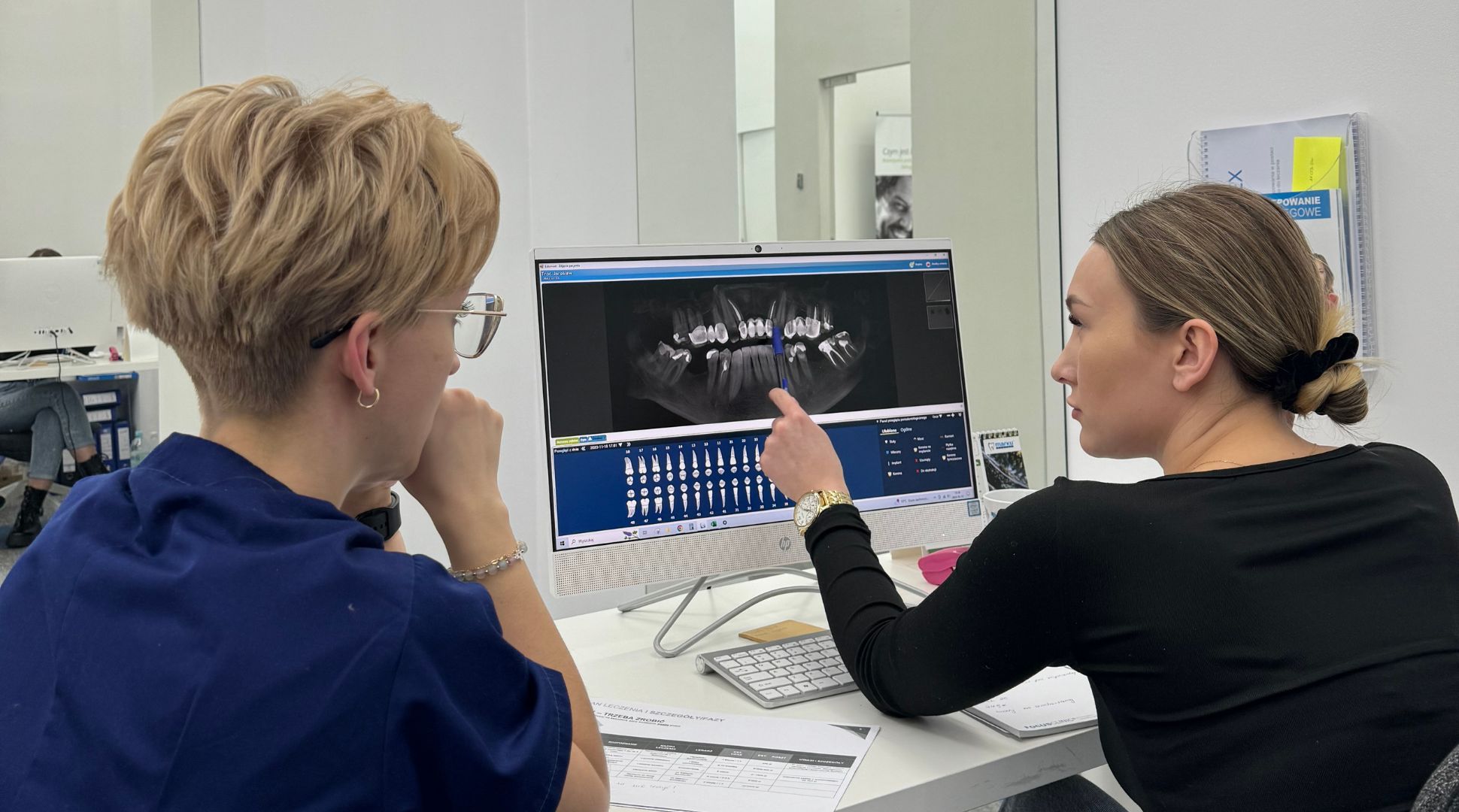 Consultation and diagnosis
1. consultation and diagnosis
The treatment process begins with a consultation and detailed planning. The dentist assesses the health of the patient's mouth and bones using imaging studies such as X-rays or CT scans.

Implantology - price list of services

Implant-supported crowns
| Treatment method | Price |
|---|---|
| Implantological consultation | 150 - 200 zł |
| Treatment plan | 2500 – 3500 zł |
| STANDARD implantation procedure | 2 500 – 3 500 zł |
| SELECT implantation procedure | 3 500 – 4 500 zł |
| Temporary crown on implant | 1500 |
| STANDARD crown on implant | 2 500 – 3 500 zł |
| SELECT crown on implant | 3 500 – 5 000 zł |
| Implant exposure + healing screw | 400 zł- 600 zł |
Implant-supported bridges
| Treatment method | Price |
|---|---|
| Implant consultation | 150 - 200 zł |
| Treatment plan | 0zł |
| STANDARD* implantation procedure per implant (number of implants depends on the number of missing teeth to be restored) | 2 500 – 3 500 zł |
| SELECT* implantation procedure per implant (number of implants depends on the number of missing teeth to be restored) | 3 500 – 4 500 zł |
| Implant-supported bridge with two crowns STANDARD | from 5 000 zł |
| Implant-supported bridge with two crowns SELECT | from 7 000 zł |
| Implant-supported bridge with three crowns STANDARD | from 7 500 zł |
| Implant-supported bridge with three crowns SELECT | from 9 000 zł |
| Implant exposure + healing abutment | 400 zł- 600 zł |
| Temporary bridge on implant | 1 500zł |
Implant-supported dentures
| Treatment method | Price |
|---|---|
| Implant consultation | 150-200 zł |
| Treatment plan | 0zł |
| Implant-supported denture | from 20 000 zł |
| All-on-4 – surgical stage with temporary restoration | from 25 000 zł |
| All-on-4 – prosthetic stage, acrylic restoration | from 25 000 zł |
| All-on-4 – prosthetic stage, ceramic-metal restoration | from 34 000 zł |
| All-on-4 – prosthetic stage, high-aesthetic porcelain restoration | from 38 000 zł |
| All-on-6 – surgical stage with temporary restoration | from 35 000 zł |
| All-on-6 – prosthetic stage, acrylic restoration | from 30 000 zł |
| All-on-6 – prosthetic stage, ceramic-metal restoration | from 39 000 zł |
| All-on-6 – prosthetic stage, high-aesthetic porcelain restoration | from 43 000 zł |
Zygomatic implants
| Treatment method | Price |
|---|---|
| Implant consultation | 150-200 zł |
| Treatment plan | 0zł |
| Zygomatic implant treatment | from 45 000 zł |
| Zygomatic implant treatment – prosthetic stage | from 30 000 zł |
Customized implants
| Treatment method | Price |
|---|---|
| Implant consultation | 150-200 zł |
| Treatment plan | 0zł |
| Subperiosteal/individual implant treatment | Cena ustalana indywidualne |
All-on-4
| Treatment method | Price |
|---|---|
| All-on-4® – surgical stage with temporary restoration | from 25 000 zł - 30 000 zł |
| All-on-4® – prosthetic stage, acrylic restoration | from 25 000 zł - 27 000 zł |
| All-on-4® – prosthetic stage, ceramic-metal restoration | from 34 000 zł - 36 000 zł |
| All-on-4® – prosthetic stage, high-aesthetic porcelain restoration | from 38 000 zł - 40 000 zł |
All-on-6
| Treatment method | Price |
|---|---|
| Implant consultation | 150-200 zł |
| Treatment plan | 0zł |
| All-on-6 – surgical stage with temporary restoration | from 35 000 zł |
| All-on-6 – prosthetic stage, acrylic restoration | from 30 000 zł |
| All-on-6 – prosthetic stage, ceramic-metal restoration | from 39 000 zł |
| All-on-6 – prosthetic stage, high-aesthetic porcelain restoration | from 43 000 zł |
Attention! The STANDARD implant procedure is dedicated to patients with good conditions, diagnosed after clinical radiological examination. It is an implant for people who care about a reliable and proven solution.
The SELECT implant procedure is a solution for demanding patients with difficult conditions. With this procedure, despite the complicated conditions, the patient achieves faster recovery and a highly aesthetic treatment result.
The 4 aspects that make up the price of the STANDARD and SELECT implant procedure:
1. patient conditions in the mouth.
2. difficulty of the procedure.
3. healing process.
4. aesthetics.
Dental implants - information
What is a dental implant?
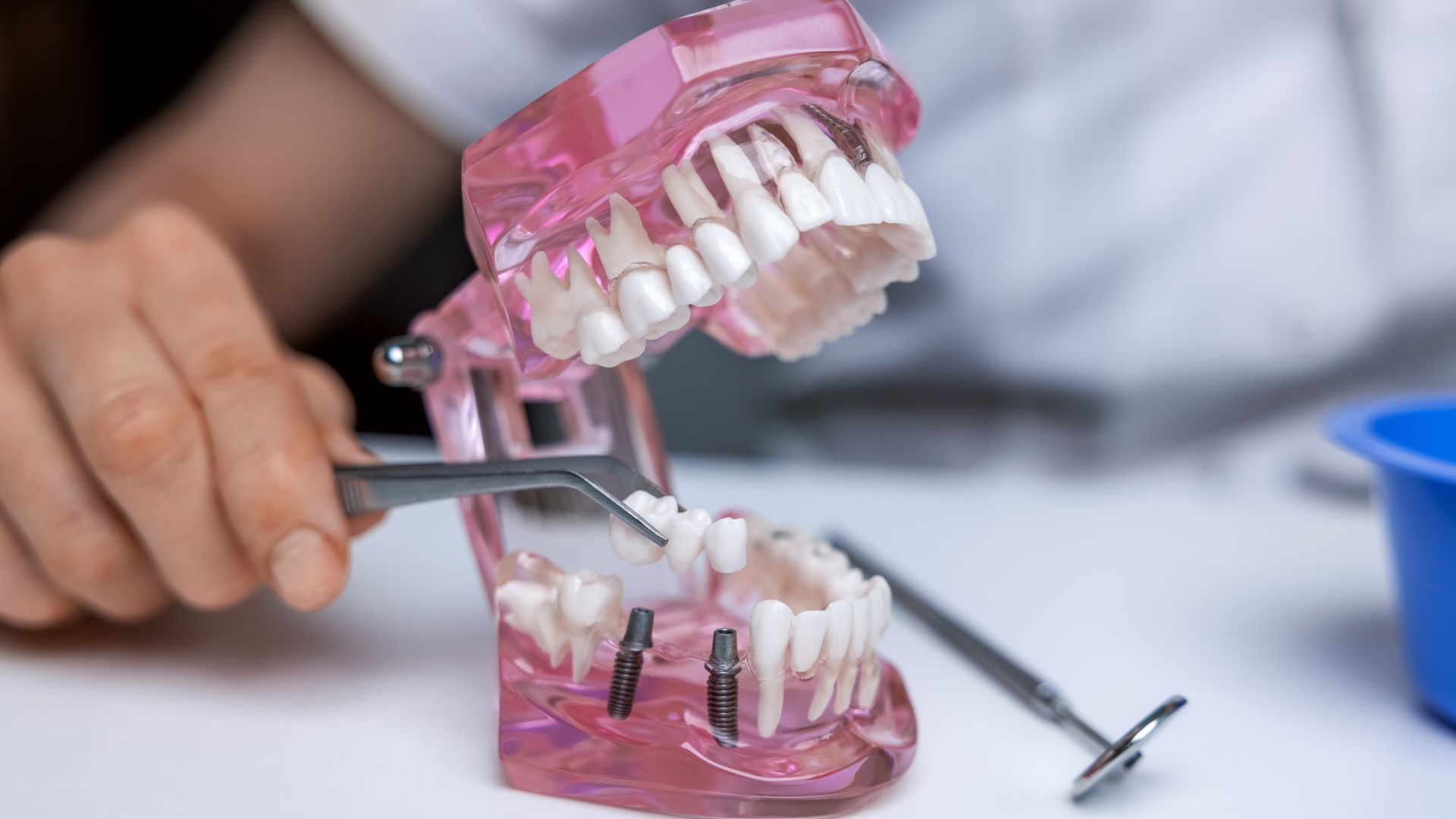
A dental implant is a small screw that is surgically implanted in the bone of the patient’s jaw or jaw, in place of a missing tooth.
An implant is usually made of titanium or zirconium oxide and functions as a replacement for the root of a tooth. The implant provides the foundation for a future prosthetic restoration, such as a crown, bridge or fixed denture. A tooth implant helps restore the aesthetic appearance of a smile, but also helps maintain a healthy bone structure and prevents bone loss.
The main components of a dental implant are:
- Root part (implant proper) – implanted into the bone, replaces the natural root of the tooth. Made of biocompatible material that is well tolerated by the body and promotes the process of osteointegration – fusion with the bone,
- Abutment – a component that connects the root part of the implant to the prosthetic crown. It is attached to the implant after the healing period,
- prosthetic crown – the visible part of the tooth that is attached to the abutment. It can be made of various materials, such as porcelain, ceramic or composites, which perfectly mimic the appearance and color of natural teeth.
Dental implants are considered the most permanent and effective solution for people with missing teeth. They improve chewing function, smile aesthetics and the overall comfort of the patient’s life.
Types of dental implants
There are different types of implants that can be used depending on the individual needs of each patient. The choice of a particular type of implant depends on a number of factors, including the condition of healthy bone tissue, the position of the teeth, the patient’s overall health, expectations and abilities.
The differences between the implants concern:
- the material from which they are made – there are titanium implants (well tolerated by the body) and ceramic implants made of zirconium oxide (shade similar to natural teeth),
- shape and size – screws, cylinders and spirals from 2 to 6 mm in diameter,
- phasicity, or the required stages of treatment – single-phase implants (placed on the implant immediately after implantation) and two-phase implants (installed after the screw has fused with the bone),
- Duration of use – temporary implants (placed for the time the screw fuses with the bone) and permanent implants (placed permanently after the gum has healed),
- patient’s needs and expectations (e.g., oral and bone condition) – long-term edentulousness is associated with bone atrophy, in which case tooth implant placement may require bone grafts or a sinus floor lift. Both procedures can be avoided by using special longer zygomatic implants.
When implants are used - indications
Implants are used in a variety of situations, most notably:
- single missing teeth – an implant allows you to replace a tooth, leaving the adjacent healthy teeth intact (no grinding required)
- numerous cavities – dental implants can be used to support dental bridges, replacing several missing teeth.
- Total edentulousness – implants can be used to support fixed dentures (Full arch on 4/6), providing greater stability and comfort.
What does the implant procedure look like?
The tooth implant procedure is a complex process that usually involves several visits to the dentist.
- Initial consultation – the patient makes an appointment for an initial consultation with the dentist. The doctor performs a detailed examination of the patient’s mouth and teeth. Precise diagnostic imaging (e.g., CBCT scan) is also performed to assess the condition of the bone and decide whether the patient is eligible for implants.
- Development of a detailed treatment plan – if the patient is qualified for implants, the doctor discusses the treatment plan, risks and benefits of the procedure. If the plan includes any oral procedure necessary for bone atrophy (e.g., sinus lift, grafting), it will prolong the entire procedure. The treatment process can be shortened by usingzygomatic implants.
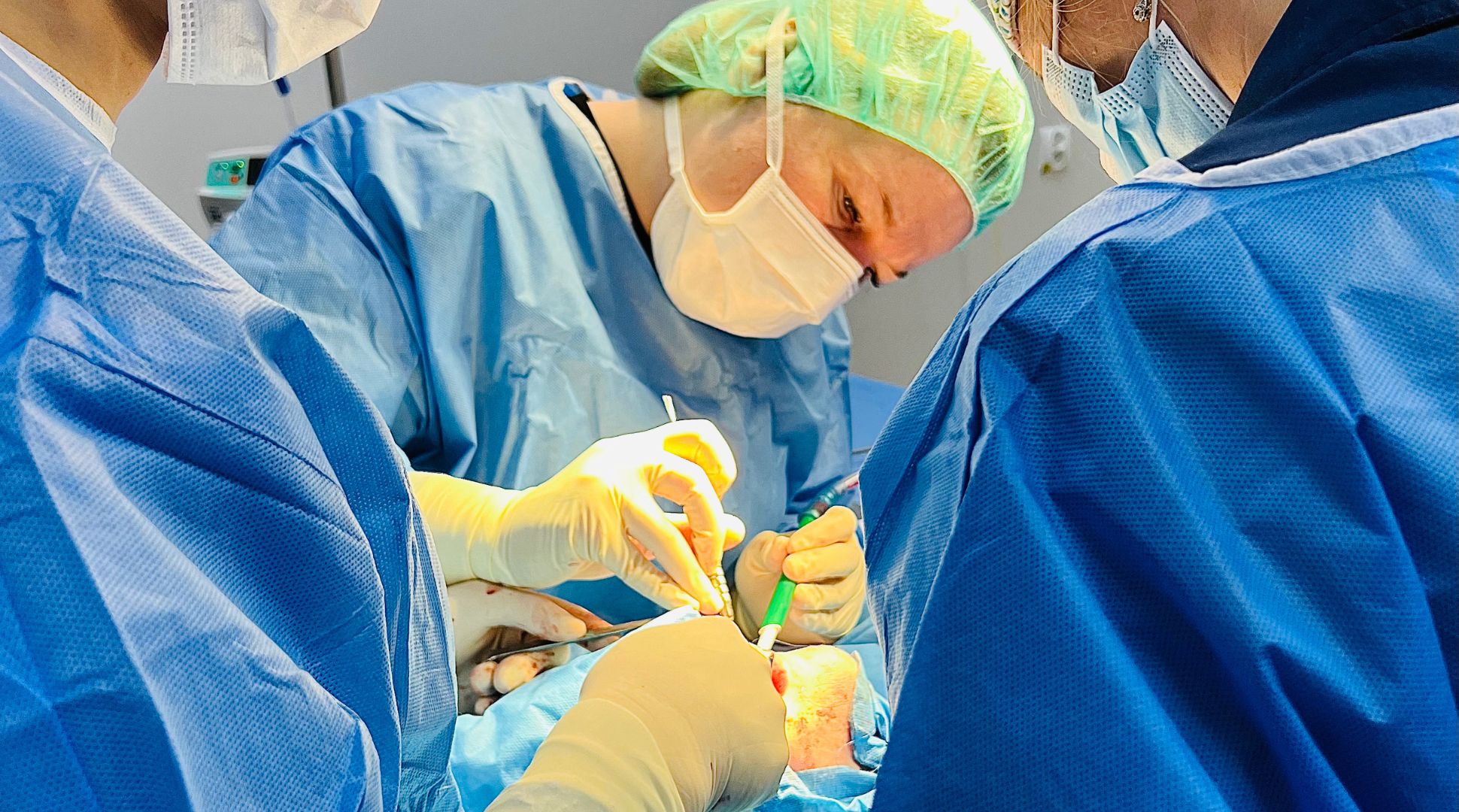
- Implant placement – the procedure is performed under local anesthesia (zygomatic implants usually require general anesthesia). A small incision is made in the gums to expose the bone and make a hole in it into which the dental implant will be inserted. The implant is placed in the hole and the incision is sewn up. The implant is then said to be successfully inserted.
- Healing and integration – after implant placement, several months (usually 3 to 6) are required for the jawbone to fuse with the implant in a process called osteointegration. During this time, temporary restorations (crowns, bridges, dentures) are used.
- Attaching a special abutment – once the implant is fully integrated into the bone, the dentist places a piece that will connect the implant to the crown. It is usually necessary to make a small incision.
- Fixing the crown – after the gums around the abutment have healed, the dentist will try on and then fix the final crown of the tooth.
- Follow-up and care – after treatment, a long-term evaluation of the treatment performed is recommended.
How long does it take to get a tooth implant?
The implant procedure itself usually takes between 30 and 60 minutes. The time may vary depending on the specifics of the case and the procedure used. The healing process required before a permanent prosthetic restoration can be applied usually takes 3 to 6 months.
In the case of the so-called immediate implantation techniques, it is possible to place an implant right after a tooth extraction. Not every patient qualifies for such a procedure.
Dental implant placement - post-operative tips
After tooth implant surgery, the patient should strictly follow the doctor’s recommendations for diet and oral hygiene.
Among the most common post-surgical tips are:
- Refraining from exercise for several days after the procedure,
- Regular check-ups with the dentist,
- maintaining oral hygiene,
- giving up the sauna, sunbathing, swimming pool (until the swelling goes down).
Advantages of dental implants
- They look and function like natural teeth,
- They replace the missing tooth root and protect the jawbone from atrophy,
- allow the adjacent teeth to remain healthy,
- provide stability and comfort,
- allow for the restoration of full chewing function and recovery of biting power,
- are long-lasting and require no special care other than standard oral hygiene
Implants - contraindications to the procedure
Dental implant placement is an advanced procedure that can bring many benefits to patients with missing teeth. It is important to note that there are certain contraindications that may prevent the procedure from taking place. Among them are:
- certain systemic diseases – including diabetes, heart disease, uncompensated thyroid conditions and severe varieties of osteoporosis,
- Cancer – patients undergoing oncological treatment or a history of cancer,
- Blood clotting disorders – due to the risk of bleeding during and after the procedure,
- insufficient bone tissue – bone regeneration surgery may be necessary,
- Poor oral health – gum disease, inflammation and advanced tooth decay must be treated before implants are placed,
- pregnancy and lactation,
- others, including mental illness, bruxism, smoking.
Implants Warsaw - price
The cost of a tooth implant and the entire implant treatment can vary depending on a number of factors, such as the type of implant, the material from which it is made, the need for additional procedures and the type of prosthetic restoration method chosen. For standard tooth imp lants, the price of implanting a single screw at Focus Clinic starts at PLN 1,900.
See also
 May 23, 2025
Cheek and mouth collapse – changes in facial structure due to loss of teeth and bone
Tooth loss is a problem that not only affects the functionality of the oral cavity, but also significantly alters the…- May 22, 2025
Tooth pulp – functions and most common problems
Tooth pulp is the soft tissue inside the tooth, surrounded by hard structures such as dentin and enamel. It plays…  March 13, 2025
Zirconia crown – what is it? Information and application
A healthy and aesthetically pleasing smile is a dream for many people, and modern dentistry offers modern solutions to restore…


